10 Low Progesterone Symptoms in Perimenopause
ALFREDO DE BENEDICTIS FOUNDER | HAIRSTYLIST

Alfredo De Benedictis is an Italian-British hair stylist and salon owner with over 40 years of experience. Since 1989, his passion for innovation has led him to create groundbreaking hair tools that minimize stress on the hair while delivering flawless results. From the iconic Rootpermer and Wellformer of the ’90s to the global hit Babyliss Curl Secret, Alfredo’s mission remains the same—developing tools that protect hair health without compromising style.
Key takeaways:
- Low progesterone symptoms don’t always signal perimenopause, but they often overlap as menstrual cycles become irregular or anovulatory.
- Sleep and mood swings are common but ‘red flag’ symptoms, such as heavy bleeding or sudden or drastic changes, should be checked by a healthcare professional immediately.
- Hair can thin or break; be honest with yourself about the evidence and focus on hair-safe routines.
Table of Contents:
- What is progesterone?
- What does progesterone do?
- Why does progesterone drop first in perimenopause?
- Symptoms of low progesterone (the checklist)
- Progesterone and hair growth (what we know, what we don’t)
- Heat styling when hair feels more brittle
- Should you test hormones in perimenopause?
- How to increase progesterone (safe, realistic options)
- Most common side effects of progesterone (HRT forms)
- Pros and cons table: ways people try to manage symptoms
- How can KEEO help?
- Our Guarantee
- FAQs
We’ve long advocated for a better understanding of our bodies and how hormone imbalances can significantly impact our hair. Today, we are focusing on progesterone.
In this blog, we’ll outline progesterone’s role in hair growth and overall health, explain how too little can affect the health of your hair and body, and offer advice on how to manage the symptoms.
What is progesterone?
Progesterone is a hormone produced by the ovaries, also called the corpus luteum, in the second half of the menstrual cycle, known as the luteal phase.
It is only produced in significant quantities after ovulation (when the egg is released) to balance oestrogen levels.
What does progesterone do?
Working alongside oestrogen, progesterone regulates the menstrual cycle, prepares the uterus for pregnancy, and supports the early stages of pregnancy when conception has occurred. After conception, increased progesterone levels are maintained for the first 10 weeks of pregnancy.
If conception does not occur, progesterone levels fall, and you get your period.
More relevant to the rest of the body, it calms the nervous system and helps to determine your energy levels, mood, and thyroid function.
Other benefits of progesterone include:
- Better breast health
- Uninterrupted sleep
- Reduced anxiety
- Reduced inflammation
- Fat burning
- Improved cholesterol
- Better-balanced immune system
- Better heart health
- Higher temperature and metabolic rate
- Improves bone density
- Has anti-androgen properties - reducing the effects of male hormones (androgens)
Why does progesterone drop first in perimenopause?
When ovulation becomes less frequent, during perimenopause, progesterone starts to decline. This decline is not linear, fluctuating from cycle to cycle. However, it results in lower overall levels of progesterone. Lower levels of progesterone mean higher levels of oestrogen, which can result in some undesirable symptoms. It can also increase the risk or exacerbate other health conditions.
Symptoms of low progesterone (the checklist)
Symptoms of low progesterone can feel random and unpredictable. They include, but are not limited to:
- Irregular and/or missed periods
- Bleeding or spotting between periods
- Bloating and water retention
- Mood swings and anxiety
- Food cravings
- Fatigue or drowsiness
- Disturbed sleep
- Hot flushes and night sweats
- Sore, tender, or swollen breasts
- Decreased libido
- Vaginal dryness
- Pain during sex
- Trouble conceiving
Symptoms may be more pronounced in late perimenopause as you begin to skip more periods and have anovulatory cycles, where ovulation doesn’t occur and progesterone isn’t produced.
Progesterone and hair growth (what we know, what we don’t)
So what does this have to do with your hair? Well, we know that hormone imbalances also play havoc with our hair.
Low progesterone levels disrupt the hair growth cycle by allowing androgens such as DHT to shrink follicles and cause a shorter hair growth phase.
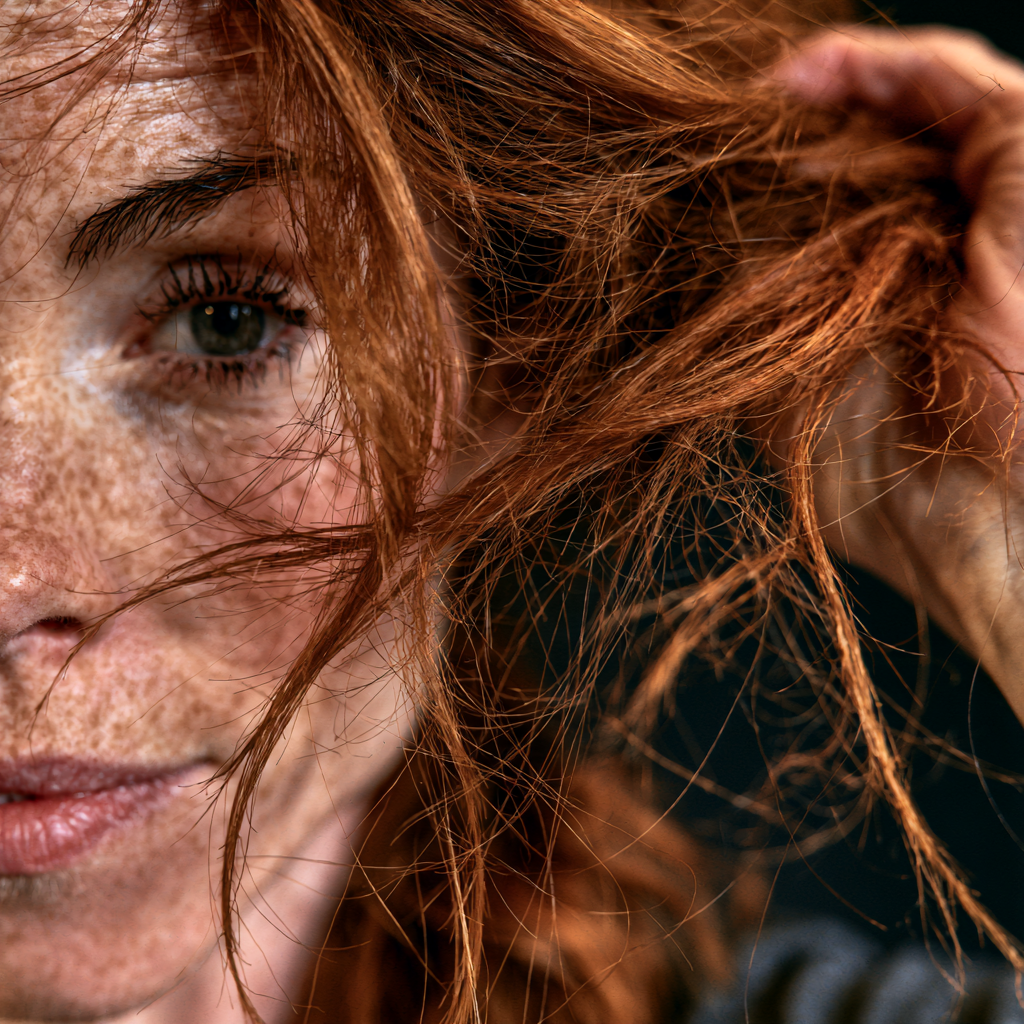
Hair may feel thinner, drier, and more brittle. Some people experience a change in their curl pattern, e.g., straight to wavy or wavy to curly, as hair follicles change shape. Shedding may also increase.
Heat styling when hair feels more brittle
When hair is vulnerable to thinning and breakage, you need to take extra care with it. That doesn’t mean you can’t have fun with your hair or that heat styling is banned.
Give your scalp some extra TLC Give your scalp some extra TLC and ensure that you are hydrating and moisturising your hair with pH-balanced products. Regular trims are also essential to remove dead ends and help new healthy hair growth.
Here’s a quick checklist of the low and slow method to protect your hair when heat styling:
- Section your hair and style it in small sections.
- Use fewer passes.
- Start with the lowest temperature and only increase if your hair needs it.
- Use a good heat protectant.
- Glide straighteners slowly through hair.
- Reduce tension by using a gentle tool such as the KEEO Genius.

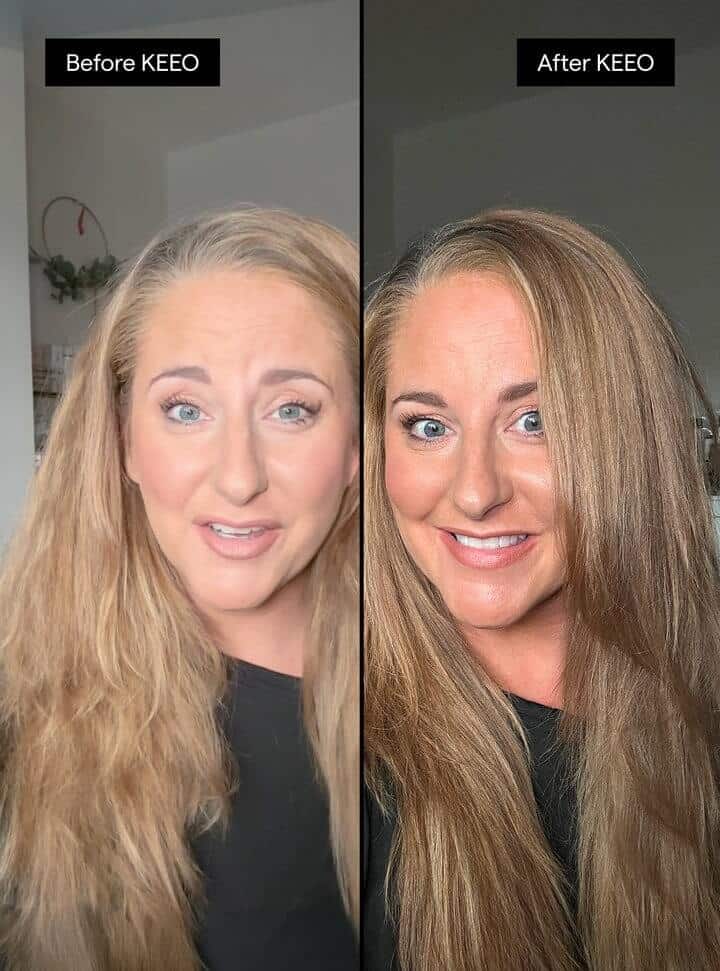
KEEO results:
Why not check out our recent results helping women across the UK (and beyond)
Should you test hormones in perimenopause?
If you are 45 or older, a diagnosis is usually made based on the symptoms you are experiencing, and hormone tests aren’t typically required.
For younger patients or where there is diagnostic uncertainty, you can test progesterone levels five to seven days after ovulation, providing you still have relatively regular periods. This is typically day 19 to 21 of a 28-day cycle. You can either take a blood test or your doctor will perform a dried urine test.
How to increase progesterone (safe, realistic options)
Support for low progesterone may be the first strategy to combat symptoms of early perimenopause. Discuss the best options with your clinician.
- GABA (gamma-aminobutyric acid) supplements can help relieve stress and aid in better sleep.
- Stress management techniques can help minimise symptoms.
- Get more sleep to support a healthy menstrual cycle.
- Eat plant estrogens (Phytoestrogens) found in foods such as watercress, spinach, mustard greens, celery, parsley, coriander, and citrus fruits.
- Pumpkin and sunflower seeds, eggs, wild-caught fish, and whole grains support hormone health.
- Stabilise blood sugar levels by reducing alcohol and sugar intake.
- Herbal supplements such as chaste tree or chasteberry can reduce PMS symptoms and help with luteal phase defects.
- Hormone Replacement Therapy (HRT) can be started in perimenopause to help balance progesterone and oestrogen levels
Most common side effects of progesterone (HRT forms)
Most side effects occur from taking synthetic progestins, so be sure to ask for bio-identical (micronised) progesterone.
Side effects that can occur with progesterone HRT include:
- Anxiety, depression, and mood changes
- Bloating and abdominal cramps
- Back and breast pain
- Drowsiness, dizziness, and fatigue
- Spotting or bleeding
- Itchy skin or a mild rash
- Acne or oily skin
It is important to note that most of these side effects are temporary and should settle down within a few months as your body adjusts to the hormones.
If you are taking HRT cyclically, symptoms may be more pronounced in the progesterone stage.
If symptoms persist or worsen after six months, please consult your doctor.
Pros and cons table: ways people try to manage symptoms
There are pros and cons to each method used to manage symptoms. This is not direct medical advice, just a starting point for you to discuss with your clinician.
| Approach | Pros | Cons |
|---|---|---|
| Lifestyle basics (sleep, stress, protein.iron focus) | Low risk, supports overall symptoms | Slower results, won't fix everything |
| Over the counter supplements | Easy to try | |
| Clinician-led HRT/progesterone/td> | Can be effective for managing some symptoms | Not suitable for everyone; side effects can be severe, proper review is required |
How can KEEO help?
Our new and improved KEEO Genius Pro+ can help you to style your hair while you work through hormone symptoms with a trained clinician. Our patented contoured plates and air gap reduce tension by up to 70%. This means you can straighten or style your hair without the typical tugging and pulling you get with most heat styling tools. Your cuticle doesn’t get crushed, so your hair retains its health.
Speaking of heat, the Genius Pro+ also allows custom temperature and tension settings, so you can choose how hot and how much contact is required for your hair. If you aren’t sure of your ideal temperature and tension, you can take our short heat and tension quiz to find out.
You can also read through our recent blogs on Hormones & Hair and Hair & Heat.
Our Guarantee
We’re confident you will love the Genius Pro+ as much as we do. That’s why we offer a 30-day risk-free trial. Use it at your leisure at home for up to 30 days, and if you are not completely satisfied with your purchase, you can send it back for a full refund, no hard feelings.
FAQs
Yes, you can take progesterone continuously, under the guidance of a qualified doctor, as part of Continuous Combined Hormone Replacement Therapy (CCHRT). This is usually when you are postmenopausal and haven’t had a period for over a year. It can be taken with or without estrogen to prevent monthly withdrawal bleeds, which may occur in sequential HRT, and help manage other symptoms of menopause. You must consult a doctor to ensure you are taking the right type and the correct dose.
Some supplements, such as Vitex/Chasteberry, and vitamins, such as B6, C, E, Magnesium, and Zinc, can support your body’s progesterone production, but they do not directly supply or increase progesterone. Supplements should only be taken under your doctor’s guidance, particularly if you are pregnant, breastfeeding, or taking other medications.
Symptoms of excessive progesterone HRT include, but are not limited to:
- Tender, swollen, or painful breasts.
- Digestive problems such as water retention, bloating and heaviness, cramps, nausea, and diarrhea.
- Headaches and migraines.
- Feeling tired or drowsy.
- Skin problems such as a mild rash, greasy skin, itching, or acne.
- Anxiety.
- Mood swings.
- Loss of focus and difficulty concentrating.
- Leg/back cramps or pain.
- Vaginal bleeding or spotting.
If you have any symptoms, consult your doctor about changing the type of progesterone you are taking. Some women can tolerate micronized progesterone better than synthetic progestins, as it is identical to that naturally produced by the human body. Synthetic progestins may exacerbate PMS-like symptoms.
Progesterone does not directly cause weight gain. However, too much can interrupt your body’s natural blood sugar regulation and lead to weight gain. It can also cause bloating and water retention, causing weight to fluctuate over a short period of time. In some people, progesterone increases appetite. In others, it can help regulate your appetite.
Yes, too little progesterone causes a hormone imbalance, which can cause hair to thin and increase shedding. It can also make hair less healthy, interrupting the growth phase, resulting in dry, brittle hair that is more prone to breakage. You can tell the difference by looking for signs such as whether fallen hair has a white bulb attached (natural shedding) or if it looks ragged and uneven with no bulb (broken).