


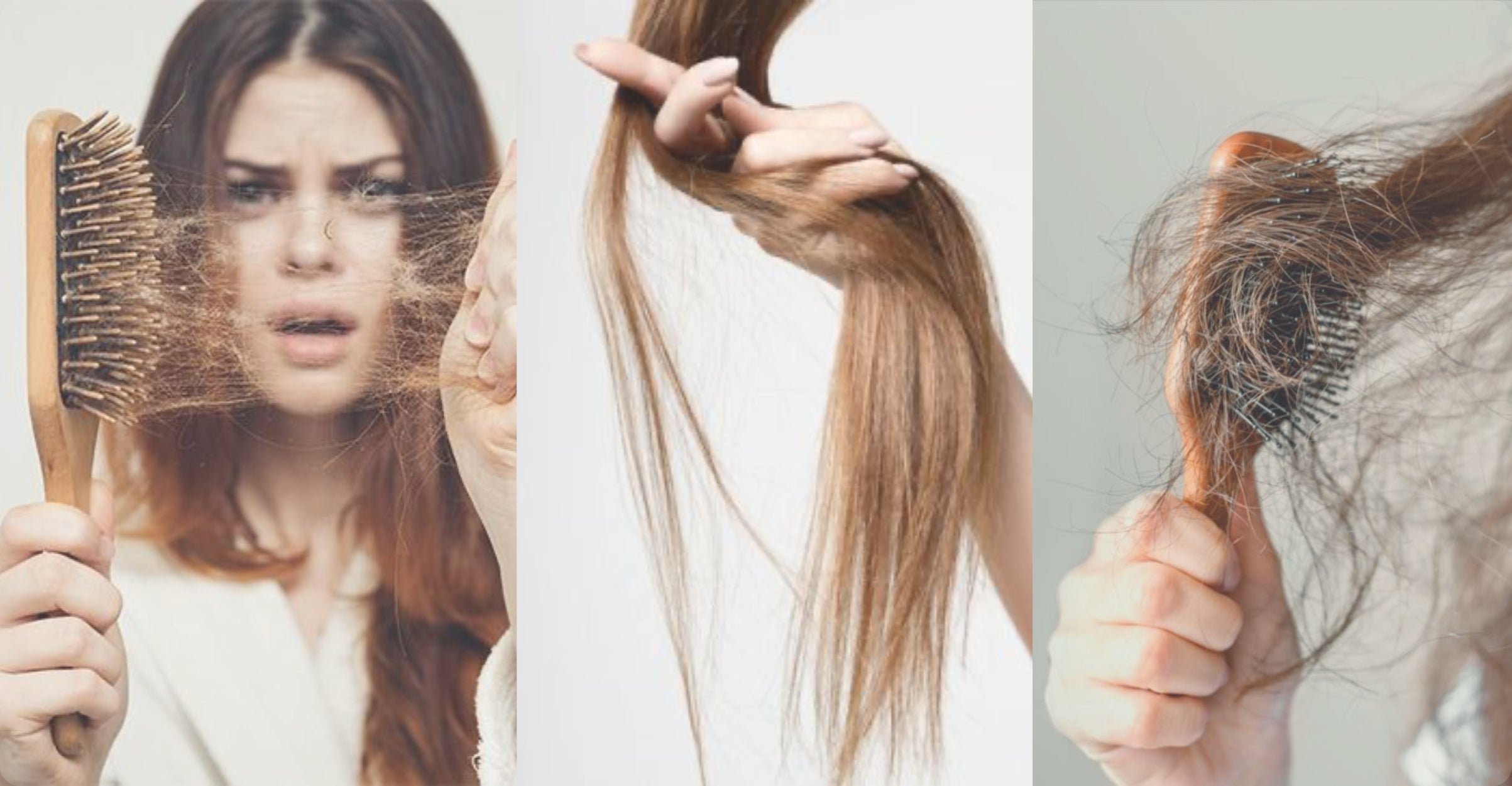
The Midlife Hair Health Playbook: How to reverse thinning hair after menopause
ALFREDO DE BENEDICTIS FOUNDER | HAIRSTYLIST

Alfredo De Benedictis is an Italian-British hair stylist and salon owner with over 40 years of experience. Since 1989, his passion for innovation has led him to create groundbreaking hair tools that minimize stress on the hair while delivering flawless results. From the iconic Rootpermer and Wellformer of the ’90s to the global hit Babyliss Curl Secret, Alfredo’s mission remains the same—developing tools that protect hair health without compromising style.
Key Takeaways:
- Menopausal hair shedding and thinning are usually temporary
- Fast action is key to minimising and managing symptoms
- Lifestyle changes & routines that can help
- Low and slow is the way to go with heat-styling
- The KEEO Genius Pro+ is gentle enough for menopausal hair
Table of Contents:
- Introduction
- What’s changing & why
- Heat without harm: the KEEO method
- Menopausal routine builder (AM/PM)
- menopause hair thinning
- menopause frizzy hair
- Lifestyle levellers
- Tips and techniques
- When to seek help
- Conclusion
- FAQs
Thinning hair, an increase in greys, dullness, frizz, and breakage, menopausal hair can be difficult to manage.
As with most symptoms of menopause, changes in your hair can be unpredictable, and it's easy to feel blindsided.
Don’t worry. We’re experts in all hair types, including peri and post menopausal hair, and we get it.We prioritise hair health and want to help you achieve your hair goals at every stage of life.
In this blog, we’ll outline some of the common changes hair goes through during menopause, explain what you can do to minimise the damage, and offer tips and tricks for restoring your post-menopausal hair to its former glory.
What’s changing & why
If you’re coming to the end of menopause, or even perimenopausal, you may have experienced fluctuations in hormones that are causing disruptions to your mind and body. That includes your hair.
Here’s what’s going on:
- The drop in oestrogen and progesterone we experience in menopause slows down the healthy hair growth phase from 90% to 60%. Less growth = more shedding.
- Androgens are no longer suppressed by higher levels of oestrogen, resulting in follicle shrinkage and finer hair.
- Cell ageing has been compared to photocopying a photocopy - less and less colour each time.As your hair cells age, they produce less melanin, which determines the colour of your hair, turning it grey, silver, or white. Eumelanin determines how dark your hair is, and pheomelanin determines how warm the colour is. Skin conditions, such as vitiligo (an autoimmune skin disease), eczema, or scalp infections, can also cause greying.
- As the hair cells age, they also produce less sebum, the natural oil that keeps our hair at a healthy, slightly acidic pH balance. This lack of oil causes our hair cuticles to lift away from the scalp and separate, resulting in dry, coarse and frizzy hair.
- Hormone fluctuations can also change the shape of a hair follicle from round (straight hair) to oval, altering your curl pattern. Not all hair follicles will change shape at the same time, which is why you may experience sections of waves, curls, or coils.
- In the case of female and male patterned baldness, sufferers are genetically disposed to a shorter growing phase due to DHT sensitivity. This means that when hormone levels are disrupted, they experience more significant hair loss than usual.
Menopausal Hair Myth Busting:
- Hair can go grey or white from stress or shock due to DNA damage called Canities Subita. According to a recent study by Nobel prize winner, Robert Lefkowitz, it is more that the pigmented hairs fall out, leaving us with non-pigmented grey hair.
- Darker hair goes grey faster. No colour goes grey faster; it is just easier to see in dark hair.
- Using baking soda can lift and brighten grey hair - it can help slightly, but you are better off using professional treatments.
- Grey hair needs washing more frequently. True, as it shows dirt faster
- Hair can turn darker before it goes grey. True, blondes and redheads often see their hair darken before it greys.
- Grey hair is more susceptible to sun damage - true, so always include an SPF for your hair and scalp.
Heat without harm: the KEEO method
These changes can knock our confidence and lead us to potentially harmful ‘solutions’, such as excessive heat styling and chemical treatments.
Don’t despair.
The KEEO Genius Pro+ is a gentle heat-styling tool, designed to protect your hair while you style it.
Here’s how to do it:
- Start low, go slow: ~190°C is our recommended baseline. Only increase for coarse/very curly hair.
- Section into finger-width sections and use 1-2 passes max.
- Our contoured plates and gentle glide function minimise tension and mechanical pull.
- Allow hair to cool before brushing (if required).
- Use the right products.
Hair Heroes:
Shampoo & Conditioner:
Milk_shake products have been specially formulated with a violet pigment to neutralise brassy tones, yellowy and dullness. Its infusion of organic fruit extracts and milk proteins moisturises and conditions deeply to restore vitality and colour vibrancy, leaving you with silky soft, beautiful hair.
Heat Protectant:
Oribe’s Hair Alchemy Fortifying Treatment Serum is a hydrating, strengthening blend of plant-based proteins that improves elasticity and prevents breakage, while protecting from heat up to 232°C.
Finishing Serum:
Verb’s Ghost Oilis a weightless vegan, sulphate-free finishing oil that smooths, shines and tames flyaways, perfect for fine to medium hair.

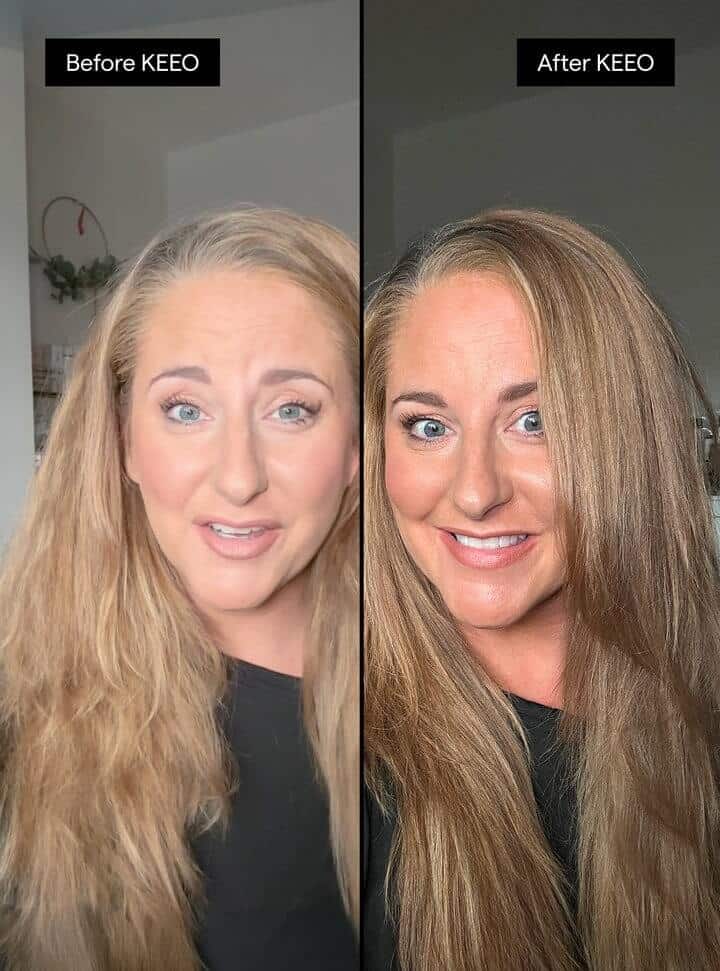
KEEO results:
Why not check out our recent results helping women across the UK (and beyond)
Menopausal routine builder
The key to maintaining gorgeous locks through menopause and beyond is consistency.
Build a simple morning and evening routine to maximise your tresses through the day and give them some TLC at night.
Morning
- Have a silver or purple shampoo and conditioner and/or toner in your rotation, but not every wash. Once a week is typically about right.
- Hairstyles such as the bevelled root-lift take minutes and add volume.
- Protect your hair and scalp from sun damage with Aveda’s Sun Care Protective Hair Veil.
Evening
- Scalpcare is even more important at this time.
- Use a silk pillowcase to minimise frizz-causing friction.
- Use a leave-in conditioner such as Naturtint Silver CC Cream Leave-in Conditioner.
Texture-specific tips and techniques
- Fine/fragile: lower heat, micro-sections, single pass, lightweight finishers.
- Grey/silver: reduce heat, smooth, then seal; anti-yellowing habits.
- Coarse/curly: controlled sections, slightly higher heat, slow glide, humidity shield.
Lifestyle Levellers
Give your hair its best chance by altering your diet and making some simple changes to your lifestyle and haircare routine.
Diet
- Low iron, vitamin D, and vitamin B deficiencies can exacerbate melanin depletion, causing dull grey hair.
- Dark chocolate, blueberries, strawberries, red cabbage, spinach, beetroot, kale, raspberries, and pecan nuts can all help to replenish the health of your hair.
- Drink plenty of water to hydrate skin and hair.
Medical
- Talk to your doctor about HRT. But be patient. You need to allow at least 4-6 months to see progress, as hair only grows an average of a centimetre each month.
- Minoxidil is a synthetic topical treatment that can promote hair growth.
- Gerovital and collagen supplements containing amino acids, omega-3 and 6, and hyaluronic acid are beneficial for strong hair, skin, and nails.
Cover Ups & Treatments:
- Root touch-up sprays can help you transition slowly.
- High and lowlights can help to blend your greys.
- Hair extensions create a fuller look.
- Chelating treatment is a salon treatment that uses chemicals to remove metal and mineral buildup in the hair.
- Keratin treatment - a semi-permanent, protein-based salon treatment used to smooth frizz and add shine.
Other Tips:
- Get a great haircut with layers to add volume and texture.
- Quit or reduce smoking and manage stress to prevent free radicals, which cause oxidative stress. This can create a buildup of hydrogen peroxide in the hair follicle, causing yellowing and structural damage.
- Try protein and B5-rich conditioning treatments
- Replace old brushes - they could be causing tension and transferring dirt.
- Go for looser hairstyles such as relaxed braids over tight ponytails.
When to seek help
Changes in your hair colour, texture, fullness, and curl pattern could be an indicator of menopause. They could also be symptoms of an underlying health condition. You should always consult your doctor or a dermatologist for any sudden or significant changes in your hair or skin, increased or patchy shedding, pain or itchiness.
Treatments, such as Hormone Replacement Therapy and minoxidil, should always be discussed with a healthcare professional.
Conclusion
How your hair behaves during and after menopause is determined by your genetics and hormonal fluctuations. However, you can fight back by understanding your hair and caring for it with diet, stress management, and specifically designed products.
Here are a few steps you can take right away:
- Take our online quiz to find our temperature and tension settings.
- Shop the only health-first hair straightener on the UK market.
- Check out our related blogs on perimenopausal hair and hair breakage.
FAQ
Menopausal hair can be tricky to gauge, as it can be fine, prone to damage and coarse. The best way to find your ideal temperature is to start low at around 120°C to 190 °C, use the minimum slow strokes, and increase the temperature if required. Remember to always use a good heat protectant.
Yes, as noted above, you should go ‘low and slow’, but you can heat-style menopausal hair. Be aware that excessive heat can cause grey hair to turn yellowy, so make sure you are using a toner around once a week.
Post menopause, most women find that the shedding settles down, but regrowth takes time and can vary based on genetics, diet, stress and how quickly you start to treat the problem.
You won’t get back the same hair you lost, but you can manage the hair loss and changes with specific products.
Grey hair can feel wiry and frizzy due to a decrease in sebum and melanin production. The grey, white or silver tone is due to a lack of melanin, which is produced in hair cells called melanocytes. When we are young, they produce our natural vibrant hair colours - brunette, blonde or red. But as we age, some of these cells no longer regenerate. This is why we typically ‘go grey’ in stages. First, a few hairs, then larger areas, until there is no pigment left in our hair and we are entirely grey or white.
When melanin production slows, our hair follicles also produce less sebum (natural oil). This causes our hair to become drier and lose its elasticity, giving it a finer but coarser, wirier texture. It can also develop a kink, wave or even curl.
You should always consult a doctor for any sudden or dramatic changes in your hair or skin, as it could indicate a wider health condition, such as thyroid disease or a vitamin B12 deficiency. Some signs to look out for include:
- Rapid shedding
- Patchy loss
- Scalp pain/itching
- Sudden change in texture or colour
Stay up-to-date
Blog posts
Best Hair Straighteners for Frizzy Hair
Best Hair Straighteners for Fine Hair (Without Damage)
Best Hair Straightener for Damaged Hair
