KEEO: Which Are The Best Hair Straighteners?
ALFREDO DE BENEDICTIS FOUNDER | HAIRSTYLIST

Alfredo De Benedictis is an Italian-British hair stylist and salon owner with over 40 years of experience. Since 1989, his passion for innovation has led him to create groundbreaking hair tools that minimize stress on the hair while delivering flawless results. From the iconic Rootpermer and Wellformer of the ’90s to the global hit Babyliss Curl Secret, Alfredo’s mission remains the same—developing tools that protect hair health without compromising style.
Key takeaways:
- Base your choice on hair type, not brand hype.
- Key features to consider when making a decision include the plate material and temperature settings.
- Each type of straightener has pros and potential cons.
- Consider your lifestyle and level of proficiency.
- The KEEO Genius Pro + adapts to most hair types.
Table of Contents:
- Introduction
- Quick answer: What is the best hair straightener?
- Key takeaways
- How to compare straighteners (what actually matters)
- Best straightener for fine hair
- Best straightener for thick hair
- Best straightener for short hair
- Best straightener for long hair
- Best straightener for damaged hair
- Best straightener for frizzy hair
- Pros and cons
- Conclusion
- How KEEO can help
- Our KEEO guarantee
- FAQs
It’s not life or death, but when your trusted straightener finally gives up the ghost, it can be hard to know what to look for in a replacement.
The market is filled with big names selling big promises, often accompanied by a hefty price tag. Unfortunately, you do not always get what you pay for, and one size doesn’t fit all.
In this blog, we’ll guide you through the process - what you should be looking for and how to choose the best straightener for your hair type and lifestyle.
What is the best hair straightener?
The best straightener is the one that best meets your needs, creating beautiful styles while maintaining hair health. Start with your hair type and consider what you hope to achieve. Then research straighteners and their various features until you find the one that ticks the most boxes.
Quick Picker:
| If your hair is… | Prioritise | Avoid | Quick tip |
|---|---|---|---|
| Fine / thin | Lower temps, gentle plates | High heat, repeated passes | Use smaller sections, 1 slow pass |
| Thick | Wider plates, stable heat | Rushing and yanking | Section hair and work in layers |
| Damaged | Adjustable temp, minimal friction | Max heat fixes all approach | Prep with protectant, cool-down |
| Frizzy | Consistent heat + humidity finish | Overheating | Finish with anti-humidity mist |
How to compare straighteners (what actually matters)
So, what should you be looking for when choosing your new hair straightener?
Plate Material
Plates are typically ceramic, titanium or tourmaline/ionic, sometimes a combination.
- Ceramic: Best for fine to normal hair - it heats evenly to reduce damage
- Titanium: Best for thick, coarse, or hard-to-tame hair - it heats up quickly, to higher temperatures.
- Tourmaline/Ionic: Best for reducing frizz and static - it emits negative ions to create a shinier, smoother finish.
Plate Size & Shape
- Narrow Plates (1 inch or less): Best for short hair, fringes, or creating curls.
- Wide Plates (1.5 inches+): Best for long, thick, or very curly hair, straightens faster.
- Bevelled/Curved Edges: Important if you want to curl or wave your hair, as well as straighten it..
Temperature Settings
Some heat styling tools are set to heat only to one ‘optimal’ temperature, designed for medium-thick hair that is not damaged. However, adjustable heat helps you to customise the temperature, starting low and slowly increasing as needed.
Weight & Ergonomics
If you will be using the straightener for prolonged periods, e.g. in a professional capacity or travelling with it, choose a lightweight model.
Cord length/ Cordless
Similarly, cordless straighteners are great for holidays and festivals. Long cords are also more convenient than a tool with a short cord. Some designs offer a 360-degree swivel cord to prevent tangles and enable flexibility.
Safety Features
Most straighteners will have an auto shut-off when the device has been left inactive for a designated time. However, some budget options may lack this feature.
Likewise, heat-resistant tips can prevent burnt fingers, foreheads and ears when styling, but not every straightener has them.
Cost
Your budget will always be a determining factor in the straightener you choose. Hair straighteners can cost anywhere from £30 for a basic styling tool to £400 for a professional-grade model.
Remember to consider the initial cost versus how often you will use the tool to get a more accurate idea of the return on investment.
Other factors to consider include:
- Lifestyle - e.g., if you travel regularly, ensure that your straightener is portable and travel-safe.
- Proficiency - some tools may be too advanced for beginners, but a professional stylist may need advanced features.
Best straightener for fine hair
Fine hair has a thinner cuticle layer, weaker cortex, and a smaller diameter, making it fragile and highly susceptible to heat damage.
This means you not only need a heat protector, but you also need to be careful to use a low heat and fewer passes.
Look for a model with precise temperature control, floating plates and a smooth glide action.
Pro Tip: Avoid clamping and going over the same section.
Best straightener for thick hair
Wider plates are best for thicker hair, to distribute heat more evenly. You may be in one position for a while, so a long or swivel cord and strong heat stability are must-have features.
You probably need a high heat, but start low and increase as you go. Take slow passes as you will need more passes, with a higher risk of damage if you try to rush.
Pro Tip: Don’t make your sections too big; straightening thick hair requires patience.
Best straightener for short hair
Straightening short hair is all about precision. Use a straightener with narrower plates and rounded edges to give easy root access and create lighter volume.
Pro Tip: Use micro-sections and a lower temperature to avoid over-flattening short styles.

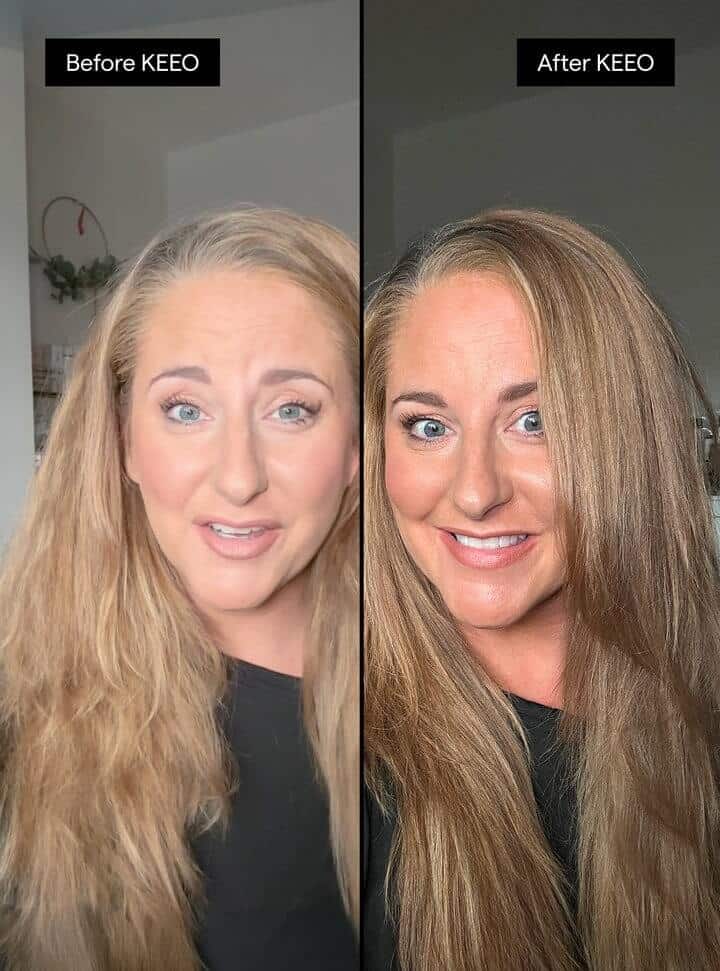
KEEO results:
Why not check out our recent results helping women across the UK (and beyond)
Best straightener for long hair
Depending on the length of your hair, you may need wider or longer plates and a comfort grip.
Prioritise models with consistent heat that are efficient and durable.
Pro Tip: Section your hair in layers and include a cool-down phase to lock in your desired style.
Best straightener for damaged hair
Age, stress, hormones, heat, and humidity can all cause damage to the hair, leaving it prone to breakage and increased shedding.
When hair is fragile, the goal is to minimise friction and heat exposure while still creating the styles you want.
Plate quality is key here, as well as an adjustable temperature and a good heat protector.
Always speak to a medical professional if shedding is sudden or severe, as it could be symptomatic of a wider health issue.
Best straightener for frizzy hair
Frizz occurs when moisture meets humidity and a rough cuticle. It can look unkempt or unprofessional.
For some, battling frizz is a daily battle. But even if your hair is not frizzy most of the time, high humidity can create frizz seemingly out of nowhere.
The best anti-frizz straighteners typically have ionic tech.
Pro Tip: Use steady, moderate heat. Heating the plates too high to maximise smoothing has the opposite effect - making hair puff and frizz later. Finish with an anti-humidity spray and a cool shot of serum on the ends.
Pros and Cons:
No straightener is perfect and what works for friends and family may not work for you. The best choice depends on your hair type, styling frequency, the condition of your hair, and its tolerance for heat. Here are a few pros and potential cons for each type of straightener.
| Straightener type / feature | Pros | Cons | Best for |
|---|---|---|---|
| Fixed temperature (one setting) | Simple, consistent | Not personalised for fine/damaged hair | Most average hair, quick styling |
| Adjustable temperature | Tailors heat to hair condition | More decision-making, can be misused | Fine, damaged, frizzy, mixed textures |
| Wide plates | Faster on long/thick hair | Harder near roots/fringe | Thick hair, long hair |
| Slim plates | Precision near roots | Slower on thick/long hair | Short hair, fringes, styling bends |
| Ceramic plates | Smooth glide, even heat | May be slower at high heat | Fine/normal, frizz-prone |
| Titanium plates | Fast heat, strong smoothing | Higher risk if used too hot | Thick/coarse hair (with care) |
| Cordless | Travel-friendly | Battery lifespan and repair concerns | Travel, quick touch-ups |
| Auto shut-off | Safety and peace of mind | Timers vary | Everyone, especially daily users |
Conclusion
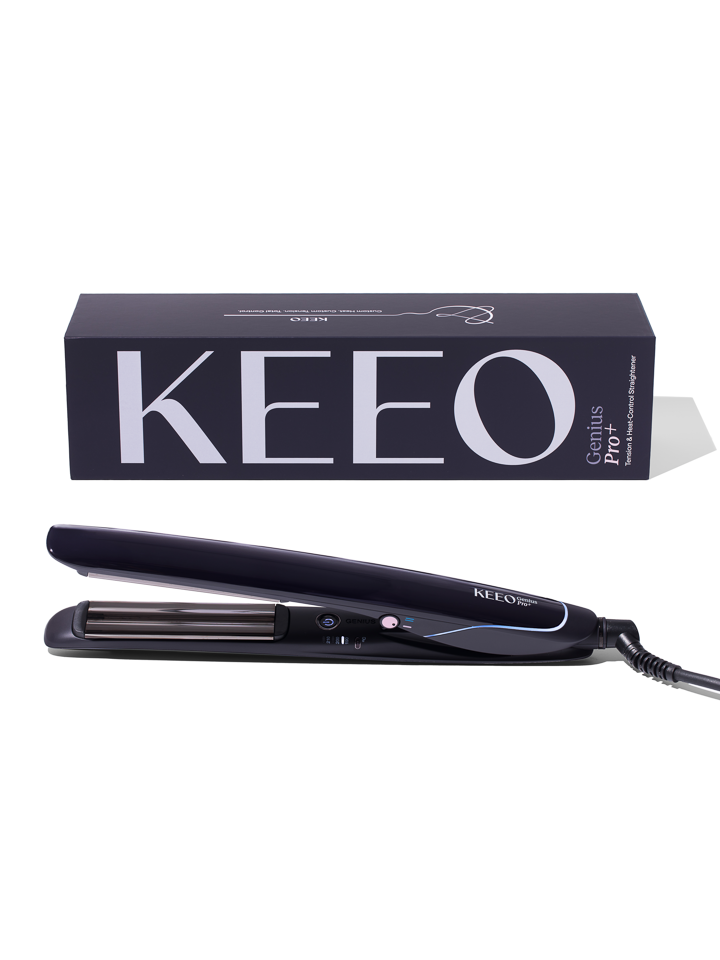
The best hair straightener is the one that makes your hair look fabulous, while maintaining its health and minimising damage. Understanding your hair type and texture and choosing your tools accordingly can help prevent heat damage. We believe that the KEEO Genius Pro+ is the closest to a safe heat styling tool on the market.
How KEEO can help
The KEEO range supports safer styling by using patented air gap technology, contoured plates and custom tension for trichologist-approved, healthier looking hair in 30 days.
In our blogs, we explain some of the science between healthy hair and offer tips and expert advice on heat damage recovery, scalp care, and styling solutions.
Our KEEO guarantee
We are so confident in our products that we offer a 30-day money-back guarantee. Try your KEEO Genius or Genius Pro + at home for a full month with no risk. If you are not completely satisfied, you can return the product through our user-friendly returns portal for a full refund. Once we have inspected it and confirmed its condition, we will process a full refund within 10 business days.
FAQs
Match the safest temperature to your hair type by taking our heat and tension quiz.
Again, ‘better’ depends on your requirements. Ceramic tends to be better for fine hair as it offers slightly more heat protection. However, if you have curly or coarse hair, titanium is better for straightening.
There are a couple of reasons you might need multiple passes to straighten your hair:
- You haven’t sectioned or your sections are too large - 1-2 inches is best.
- You are going too fast - slow down to let the hair heat and restructure.
- You aren’t pulling the hair taught so it isn’t stretching.
- Your hair is damp, causing frizz - ensure hair is dry before heat styling.
- Product build-up is creating a barrier to the heat - clean your straighteners after use.
The most important features for daily straightening are:
- Temperature control
- Tension control
- Plate material and technology
- Smart sensors
You want to preserve moisture and protect against damage, so ensure hair is nourished and fully dry before styling. Use a heat protectant and start at a low temperature, with minimal slow passes.
Cordless straighteners are fantastic for ‘on-the-go’ styling, trips, and touch-ups. However, they have a shorter battery life, which is not always reflected in the price versus a corded straightener.
If you think you are experiencing stress or hormone-related hair shedding, the first port of call should always be your doctor. However, there are signs to look out for, including:
- Gradual thinning all over the scalp, rather than bald spots or patches.
- Increased daily shedding - clumps in the drain or in your hairbrush.
- Visible scalp or a wider parting, especially in bright lighting.
- Short, fine hairs can indicate breakage rather than normal shedding.
- A white bulb on the hairs means they fell out at the root.
- Sudden onset - hormonal shedding typically starts 2-3 months after a stressful event or hormonal imbalance, e.g., postpartum or after stopping birth control.