KEEO: Best Haircuts for Menopausal Hair
ALFREDO DE BENEDICTIS FOUNDER | HAIRSTYLIST

Alfredo De Benedictis is an Italian-British hair stylist and salon owner with over 40 years of experience. Since 1989, his passion for innovation has led him to create groundbreaking hair tools that minimize stress on the hair while delivering flawless results. From the iconic Rootpermer and Wellformer of the ’90s to the global hit Babyliss Curl Secret, Alfredo’s mission remains the same—developing tools that protect hair health without compromising style.
Key takeaways:
- A good haircut can revitalise menopausal hair.
- One size doesn’t fit all - choose your hairstyle based on your thinning pattern.
- Five haircuts that flatter menopausal hair.
- How to safely style your new haircut.
- How the KEEO Genius Pro + can help.
Table of Contents:
- Introduction
- What changes in menopausal hair?
- Start here: choose your haircut based on your thinning pattern.
- The best haircuts for menopausal hair: the shortlist
- Choose by hair type and texture (fine/thick/curly/coily)
- How to style your new cut with less heat and tension
- Pros and cons
- How KEEO can help
- KEEO guarantee
- Conclusion
- FAQs
Introduction
You know what it’s like, you’ve finally found your style. You know your colours, you feel confident, and your hair is your crowning glory.
And then menopause comes along. Your hair starts thinning, changing texture, and colour, and that style that you loved is no longer flattering. So, what do you do?
Don’t worry, you’ve come to the right place. In this blog, we’ll outline the best haircuts for menopausal hair thinning, why they work, and how you can style them safely.
What’s happening to menopausal hair?
To choose your best menopausal hairstyle, it helps to understand the changes your hair is undergoing.
In the words of the famously fine-haired Jennifer Aniston, for L'Oréal, ‘here comes the science’.
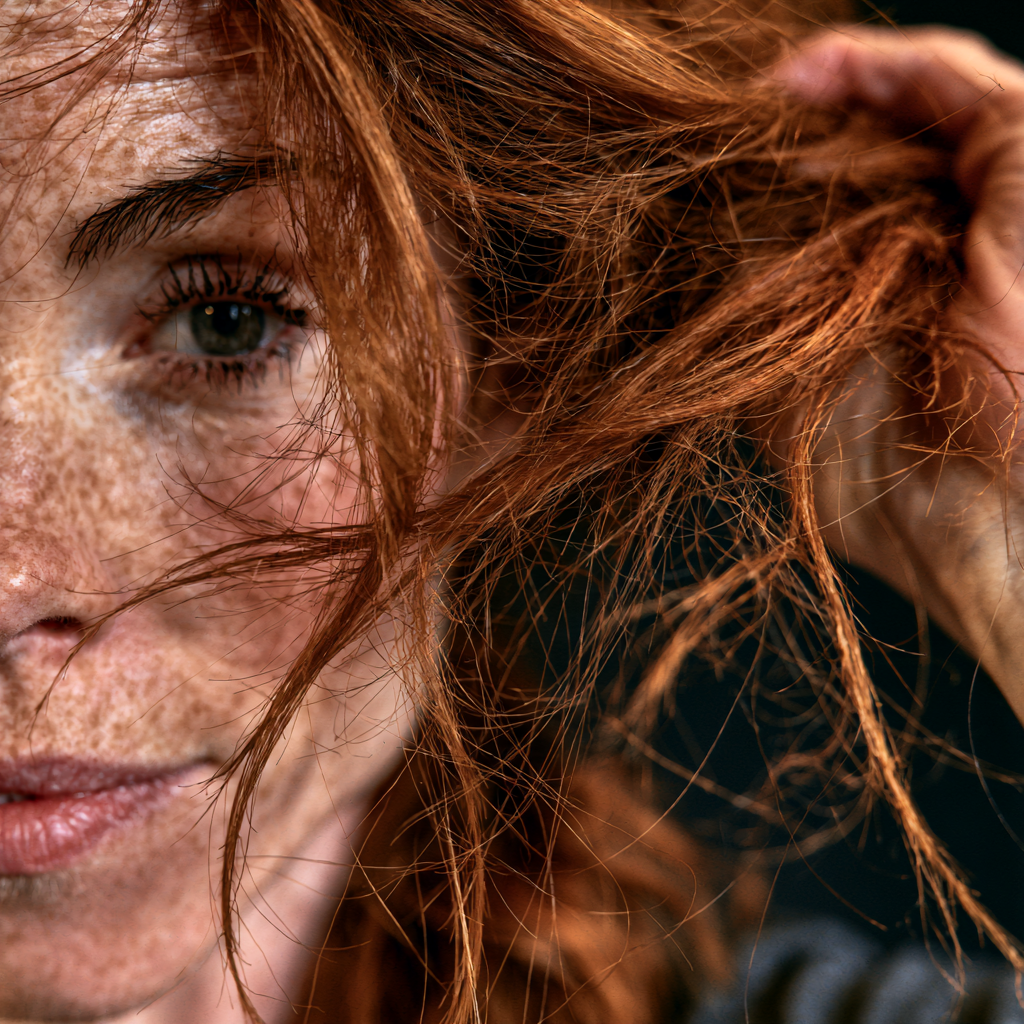
According to menopausecare.co.uk, around 50% of menopausal women experience hair loss or thinning, with some noticing a widening of their parting, plus increased shedding and breakage. This is because menopause causes a drop in oestrogen levels, including in the hair follicles. The reduction in oestrogen also allows androgens (male hormones such as testosterone) to increase, causing thinning on the scalp and hair growth elsewhere on the face and body. The physical and mental stress caused by menopause can also exacerbate hair loss and thinning.
Thankfully, some clever haircuts and style choices can help disguise hair shedding and make your tresses look fuller and thicker.
Choose your haircut based on where you’re thinning.
There are numerous articles promoting menopausal hairstyles, but many don’t take into account that each woman’s experience of menopausal hair thinning is different. For example, not every woman with thinning hair will also experience a widening parting.
Start by assessing your problem areas and then researching the most flattering cuts and styles.
The most common issues are:
- A widening part and thinning on top
- Thinning at the crown with the scalp showing through
- Hairline shedding and temple sensitivity
- Sudden shedding across the scalp

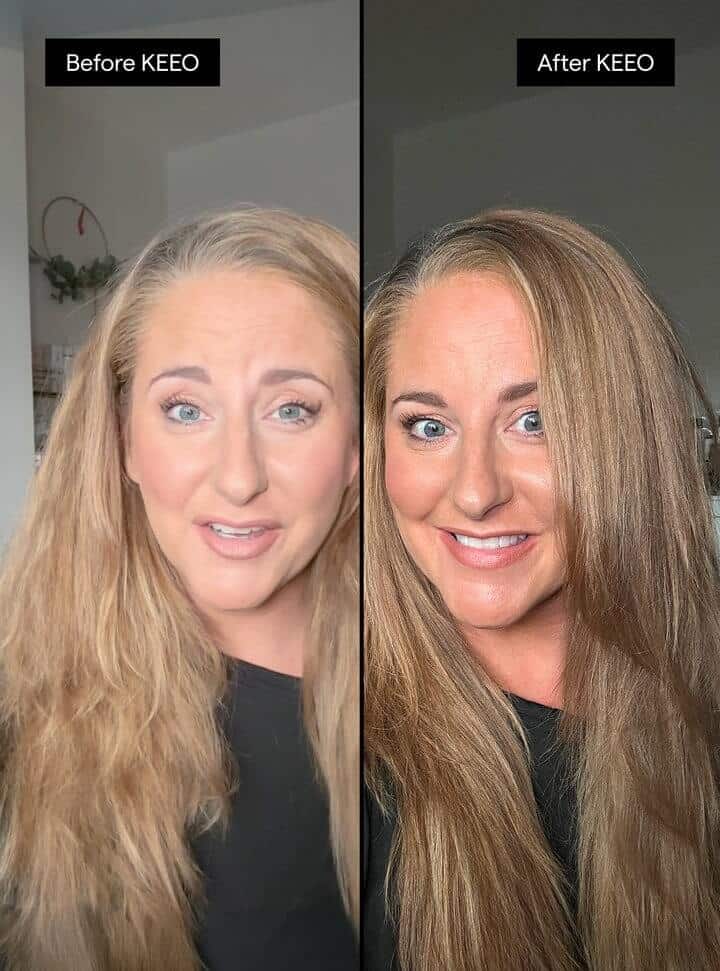
KEEO results:
Why not check out our recent results helping women across the UK (and beyond)
The haircut shortlist for menopausal thinning
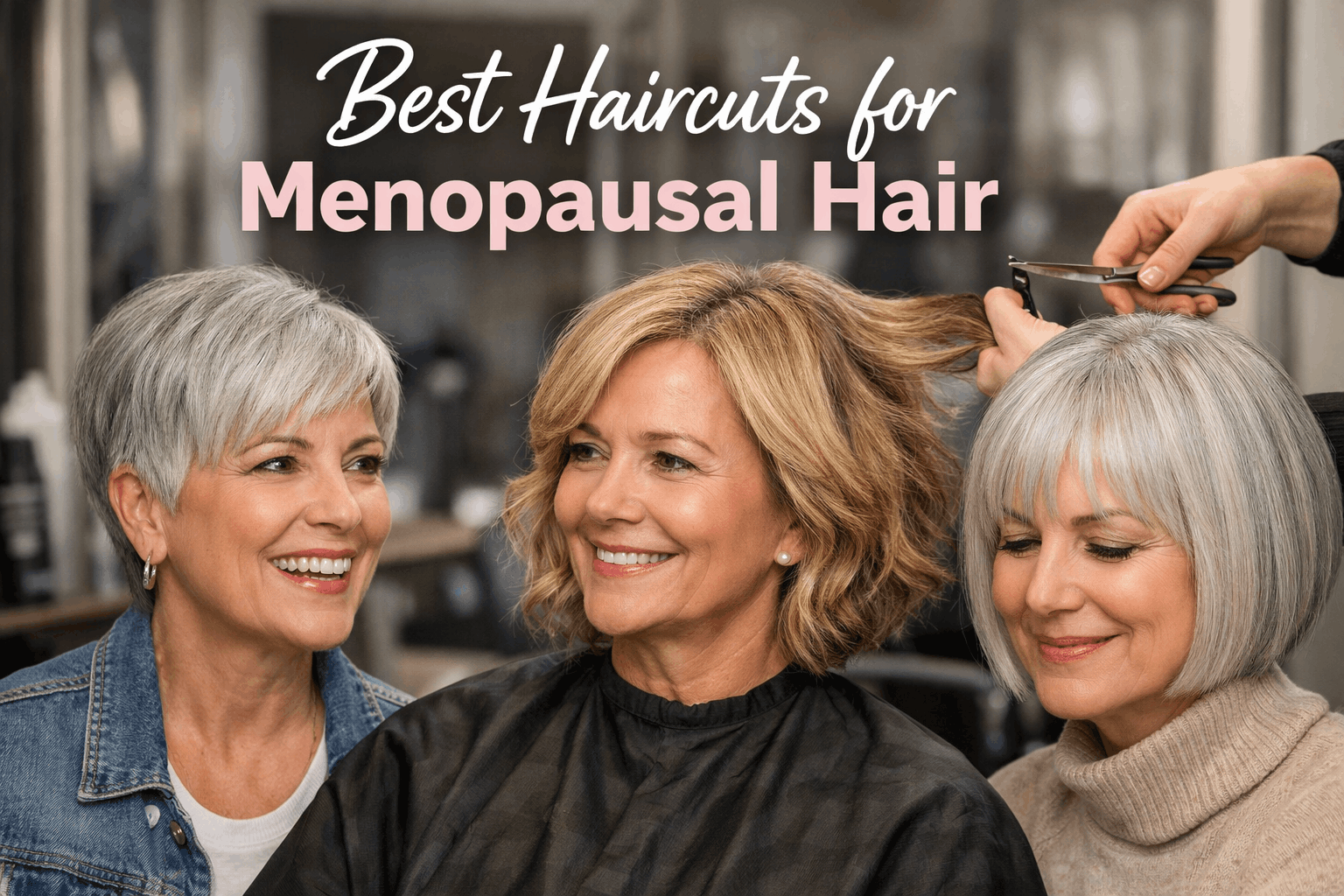
Here are the top five hairstyles for menopausal hair:
Blunt Bob
Many women go for the chop when their hair starts to thin, because losing some length typically means getting rid of split ends. A blunt bob makes hair appear thicker and healthier. It is also easy to style and maintain, making it a very popular choice for busy menopausal women.Long Layers
Conversely, not every woman is prepared to let go of her long tresses. If you want to maintain your length but give hair a thicker, fuller look, long layers can be a godsend. Often paired with subtle highlights, long layers add movement and dimension to lacklustre hair.Pixie Cut
If you are brave enough, a pixie cut can give your hair a new lease of life. Typically textured and choppy to hide thinning areas, pixie cuts look youthful yet sophisticated, and put the focus squarely on your face.Long Bob (Lob)
The lob is the ideal middle ground between a full bob and longer hair. Typically shoulder-length or just above, it is incredibly versatile, looking fabulous sleek and straight, with beach waves, or textured curls.Twist Outs
Since Afro hair can be prone to dryness and breakage before menopause kicks in, it is even more important to take care of it when ‘the change’ starts. Twist-outs are a simple but effective hairstyle created by forming two-strand twists in damp hair and leaving them to air dry. You then unwind them by hand to reveal volumised, crinkled spirals. You can change up the look depending on the size of the twists.Honourable mentions
- The shag – deliberately messy movement and body for low-maintenance volume.
- Fringes – work with most haircuts to frame your face and add volume.
- Angled bob – longer at the front, tapering to the nape of the neck for a sleek look.
- Choppy textured bob – adaptable choppy layers can be defined or shaggy.
- Soft graduated bob – face-framing longer layers at the front create fullness.
Choose by hair type and texture.
Not everyone experiences hair thinning in menopause, and hair can become coarser or change curl pattern. Ensure your hair care routine and styling are suitable for your menopausal hair. You may need to experiment with different products and techniques before you find what works for you.
How to style your new cut with less stress and heat
Dos:
- Invest in a good heat protector.
- Work in smaller sections.
- Start at a low heat and increase gradually if needed.
- Use fewer passes.
- Let hair cool.
- Finish with a protective serum.
Don’ts:
- Attempt to heat-style wet hair.
- Clamp or pull the hair.
- Go for tight styles.
Pros and Cons:
There are pros and cons to each style, so consider maintenance and whether it’s a match for your hair type.
| Haircut option | Pros for menopausal hair | Cons / watch-outs | Best for |
|---|---|---|---|
| Blunt bob | Strong outline makes ends look denser | Needs regular trims to stay ‘thick’ | Fine hair, thinning ends |
| Classic lob (collarbone) | Keeps some length with movement | Can look flat if over-smoothed | Low-maintenance, unsure about short |
| Soft pixie | Lift at crown, minimal daily styling | More frequent salon visits | Crown thinning, wants volume fast |
| Angled/A-line bob | Shape + ‘stacked’ effect without heavy layers | Often styled sleek (watch heat overuse) | Fine-to-medium density |
| Shag cut (soft) | Texture + movement to disguise patchiness | Too much texturising can go wispy | Hair that needs body |
| Soft fringe / textured fringe | Frames face; shifts focus from part | Needs gentle styling; can get oily | Widening part, wants face framing |
| Twist-outs (protective, low manipulation) | Adds volume with less heat manipulation | Needs technique/time to set | Afro-textured hair, crown concerns |
| Soft graduated bob | Round silhouette can add fullness illusion | Graduation must be subtle | Wants volume without harsh layers |
Key Takeaways:
Remember to choose your hairstyle based on where your problem areas are, following this handy table:
| Straightener type / feature | Pros | Cons | Best for |
|---|---|---|---|
| Fixed temperature (one setting) | Simple, consistent | Not personalised for fine/damaged hair | Most average hair, quick styling |
| Adjustable temperature | Tailors heat to hair condition | More decision-making, can be misused | Fine, damaged, frizzy, mixed textures |
| Wide plates | Faster on long/thick hair | Harder near roots/fringe | Thick hair, long hair |
| Slim plates | Precision near roots | Slower on thick/long hair | Short hair, fringes, styling bends |
| Ceramic plates | Smooth glide, even heat | May be slower at high heat | Fine/normal, frizz-prone |
| Titanium plates | Fast heat, strong smoothing | Higher risk if used too hot | Thick/coarse hair (with care) |
| Cordless | Travel-friendly | Battery lifespan and repair concerns | Travel, quick touch-ups |
| Auto shut-off | Safety and peace of mind | Timers vary | Everyone, especially daily users |
How can KEEO help?
Remember to choose your hairstyle based on where your problem areas are, following this handy table:
At KEEO, we prioritise hair health and lower-stress styling. Through our blog, we advise on caring for different hair types and the science behind hormonal and heat damage.
We practice what we preach.
The KEEO Genius Pro + doesn’t clamp or drag your hair. Its contoured plates and patented air gap technology glide effortlessly through for up to 70% less tension.
Our KEEO hair straightener guarantee
We’re so confident that you will love our products that we offer a 30-day risk-free trial. Use them for 30 days at your leisure, and if, for any reason, it’s not for you, just send it back. Following a careful inspection, you will receive a full refund.
Conclusion
The key to beautiful menopausal hair is to enhance your best features and disguise those you don’t like.
Thinning, a widening part, hairline sensitivity, the menopausal hair issues you may experience are many and varied. But, like a good wrap dress, a well-chosen haircut can hide a multitude of sins.
Choose yours based on what you want to show and conceal and you won’t go far wrong.
Remember to be gentle with your new hair, and style with caution, using products that protect.
Happy styling!
FAQs
Blunt or angled bobs or ‘lobs’ (long bobs) look thick and full, particularly if you are going from a longer style and noticing thinning.
No, if you don’t want to lose length, long layers can add texture and movement, giving the illusion of gorgeous fuller hair. You need to be strategic, though - too many layers can make thinning hair appear wispy.
Yes, a soft fringe can disguise a widening part and frame the face. Curtain bangs and long side fringes tend to be more flattering for thinning hair. The key is to get the right fringe for your face shape.
The best haircuts for thinning at the crown tend to be shorter, such as blunt bobs, mixed-length bobs with layers, and pixie cuts. These styles help lift the roots and conceal the scalp. You can also move your parting to one side to disguise a thinning crown.
Yes, hair loss and damage caused by pulling is called traction alopecia. If your hair is already thinning at the hairline, these styles could exacerbate the damage.
The rule of thumb for ‘normal’ hair is getting a trim every six to eight weeks. However, shorter styles require more frequent touch-ups, three to six weeks. This can also help with split ends and breakage.
Maintaining volume while styling menopausal hair with a straightener relies on preserving the hair’s moisture and not clamping or pulling down.
- Start by investing in a high-quality heat protector.
- Ensure hair is completely dry before heat styling.
- Use a lower heat, and work in small sections.
- Pull the straightener up and slightly out rather than down to create root lift.
- Start straightening from below the crown, 1-2 inches from the scalp.
- Or straighten close to the root but pull it up, curving into a C shape.
- Turning the straightener outward or inward near the ends will create movement.
Always speak to your GP about sudden significant hair loss, i.e. clumps, bald patches, itching or burning of the scalp or if you are experiencing symptoms before the age of 45. They will need to rule out other causes, such as a thyroid problem or low iron, and can advise on the best treatment.
You should also book a GP appointment if you notice a widening parting, significant thinning or persistent increased shedding.
It’s a good idea to bring a list of medications and changes to your hair care routine. Also, be honest about any other symptoms such as hot flushes, fatigue, or night sweats.