Cart
Your cart is empty
ALFREDO DE BENEDICTIS FOUNDER | HAIRSTYLIST

Alfredo De Benedictis is an Italian-British hair stylist and salon owner with over 40 years of experience. Since 1989, his passion for innovation has led him to create groundbreaking hair tools that minimize stress on the hair while delivering flawless results. From the iconic Rootpermer and Wellformer of the ’90s to the global hit Babyliss Curl Secret, Alfredo’s mission remains the same—developing tools that protect hair health without compromising style.
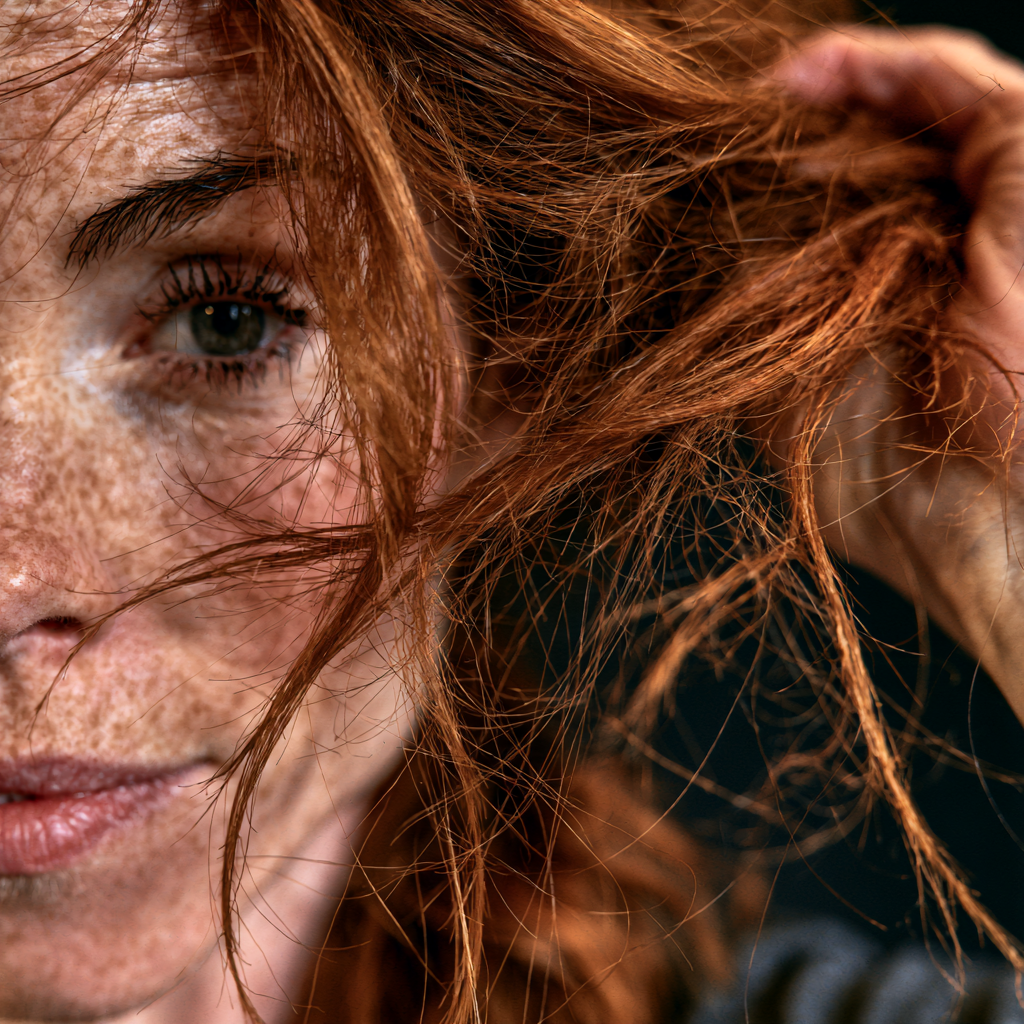
Frizzy hair can be frustrating because it rarely feels predictable. One day it looks smooth and glossy, the next it feels dry, puffy and hard to control.
Many people reach for more heat to flatten frizz, but that is not always the answer. In fact, too much heat, tension and repeated styling can make frizz worse over time.
The best hair straightener for frizzy hair should not simply press the hair flat. It should help smooth the hair gently, reduce drag, support even heat distribution and give you control without leaving your hair feeling dry or stressed afterwards.
In this blog, we’ll explain what causes frizz, what to look for in a straightener, what mistakes to avoid, and why KEEO is designed to offer a kinder styling experience for frizz-prone hair.
The best hair straightener for frizzy hair is one that smooths the hair without excessive heat, dragging or clamping.
Frizzy hair usually benefits from:
The goal is not just to make hair look straight for a few hours. The goal is to style it in a way that keeps it looking smoother, shinier and healthier over time.
This is where the right straightener matters. If a tool pulls, snags or requires repeated passes, it can rough up the hair cuticle and leave hair looking even more frizzy after styling.
Frizz happens when the outer layer of the hair, known as the cuticle, becomes raised or uneven. When this happens, moisture from the air can enter the hair shaft more easily, causing the hair to swell, puff or lose its smooth shape.
Frizz can be caused by:
Frizz is not always a sign that your hair is unhealthy. Some hair types are naturally more prone to frizz because of their shape and texture.
However, if your hair feels rough, dry or harder to smooth after styling, your current straightener or styling routine may be adding more stress than your hair can handle.
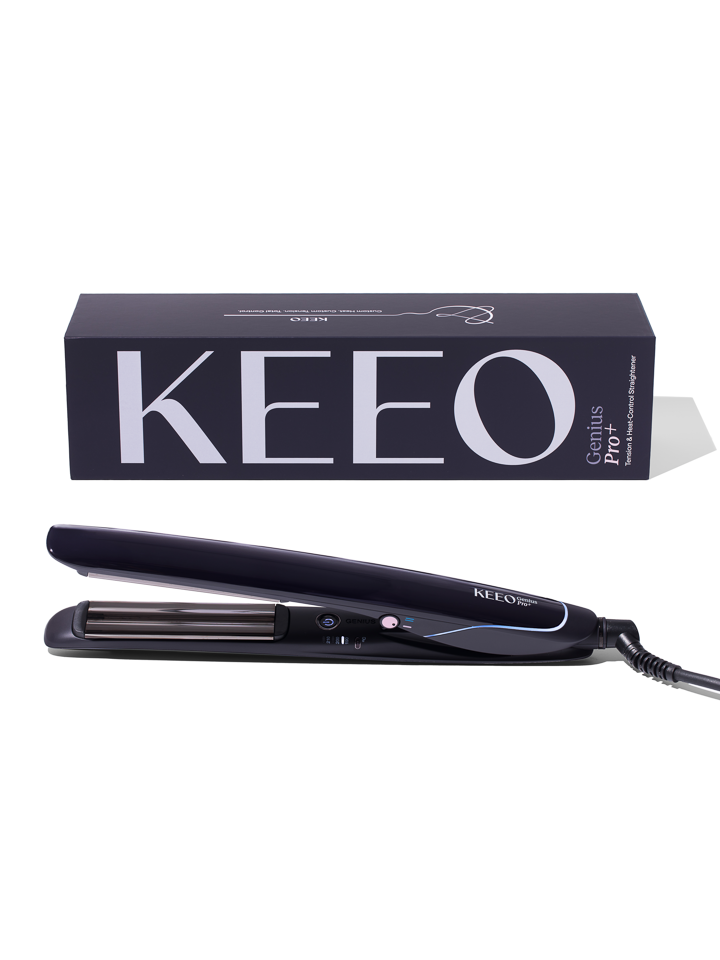
Look for a straightener such as the KEEO Genius Pro +, which is designed to support smoother, gentler styling with less tension.
The best results come from preparation, technique and the right tool.
Start by washing your hair with a smoothing or moisturising shampoo and conditioner. Frizz-prone hair often needs hydration, so avoid products that leave the hair feeling stripped or squeaky clean.
Gently towel-dry the hair and avoid rough rubbing, as this can disturb the cuticle. Apply a heat protectant before blow-drying, then make sure the hair is fully dry before using your straightener.
When styling:
If your hair is frizzy at the roots, avoid pressing the straightener flat against the scalp. Instead, lift slightly at the root and glide down in a soft arc to keep movement and avoid a flat finish.
If your ends are frizzy, focus on smoothing rather than repeatedly passing over them. The ends are usually the oldest and most fragile part of the hair, so they need the least stress.
A hair straightener can do more than apply heat. The right tool can help smooth the hair with less friction, less tension and fewer passes.
Consistent heat helps smooth each section evenly, reducing the need to go over the same hair multiple times.
Frizzy hair doesn't always need maximum heat. Adjustable temperatures allow you to choose the right setting for your hair type and condition.
Plates that glide easily through the hair help reduce friction, snagging and cuticle disruption, which can contribute to frizz.
Excessive clamping can place unnecessary stress on the hair. A gentler styling experience can help smooth hair without over-compressing the strands.
The fewer times you need to straighten the same section, the less heat and mechanical stress your hair is exposed to.
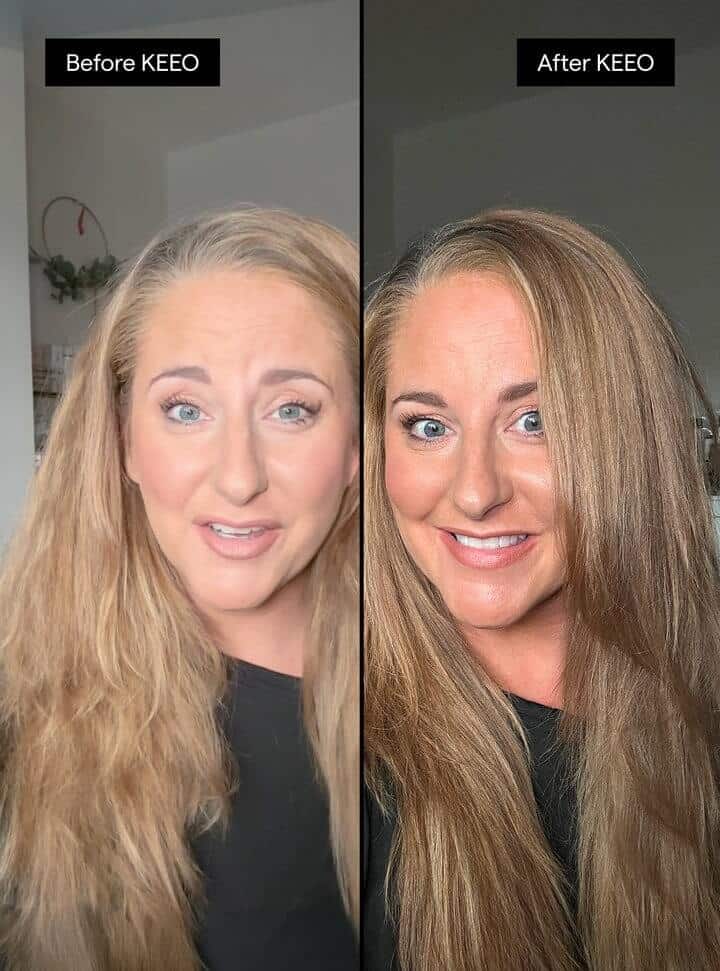
Why not check out our recent results helping women across the UK (and beyond)
Higher temperatures don't always mean better results. Excessive heat can dry the hair and make frizz more noticeable over time.
Hair should be fully dry before straightening unless your tool is specifically designed for wet-to-dry styling.
A heat protectant helps shield the hair from heat exposure and should be part of every styling routine.
Repeatedly straightening the same section can increase dryness, breakage and frizz.
Pressing the plates together too firmly can create unnecessary tension and stress on fragile strands.
Allow the hair to cool after styling, then use a lightweight smoothing product if needed to help control flyaways and add shine.
Yes, KEEO is designed to be a good option for frizzy hair because it focuses on reducing the stress placed on the hair during styling.
Frizz is not only caused by heat. It can also be made worse by pulling, clamping, dragging and repeated passes. KEEO is designed to help hair glide more smoothly through the plates, with less tension and less direct stress on the strand.
The KEEO Genius Pro+ includes:
This makes it particularly helpful for hair that feels dry, fragile, frizzy or difficult to smooth with traditional straighteners.
Instead of forcing hair flat between two hot plates, KEEO is designed to work more gently with the natural shape of the hair. This can help create a smoother finish while reducing the feeling of stress during styling.
For frizz-prone hair, this matters because the smoother the styling experience, the less likely you are to overwork each section.
The best hair straightener for frizzy hair is not necessarily the hottest one. It is the one that gives you control, smoothness and shine without unnecessary heat, tension or dragging.
Frizzy hair needs a gentler approach. That means even heat, smooth glide, neat sectioning, fewer passes and a tool that treats the hair carefully while it styles.
If your current straightener leaves your hair feeling dry, puffy or fragile afterwards, it may be time to think beyond heat and look at how your hair is being handled during styling.
The KEEO Genius Pro+ is designed for exactly that: a kinder styling experience that helps smooth frizzy hair with less tension, less pulling and more control.
The KEEO range supports safer styling by using patented air gap technology, contoured plates and custom tension for trichologist-approved, healthier looking hair in 30 days.
In our blogs, we explain some of the science between healthy hair and offer tips and expert advice on heat damage recovery, scalp care, and styling solutions.
We are so confident in our products that we offer a 30-day money-back guarantee. Try your KEEO Genius or Genius Pro + at home for a full month with no risk. If you are not completely satisfied, you can return the product through our user-friendly returns portal for a full refund. Once we have inspected it and confirmed its condition, we will process a full refund within 10 business days.
The best temperature depends on your hair type and condition, but frizzy hair should usually be styled at the lowest effective heat rather than the highest setting.
Both can work well, but the most important thing is even heat distribution and a smooth glide that does not drag or snag the hair.
Hair can go frizzy after straightening if it is dry, damaged, exposed to humidity or styled with too much heat and friction.
Use heat protection, work in small sections, avoid repeated passes and choose a straightener that glides smoothly without pulling.
Yes, straighteners can make frizz worse if they use too much heat, drag through the hair or require multiple passes over the same section.
Yes, it can be used on thick frizzy hair, especially when working in smaller sections and using controlled heat and tension.
Yes, our hair straightener is well suited to fine frizzy hair because it is designed to reduce tension and avoid flattening hair too aggressively.
A lightweight serum can help smooth flyaways and add shine, but avoid using too much product, especially on fine hair, as it can weigh it down.