KEEO: How to Prevent Heat Damage from Hair Straighteners
ALFREDO DE BENEDICTIS FOUNDER | HAIRSTYLIST

Alfredo De Benedictis is an Italian-British hair stylist and salon owner with over 40 years of experience. Since 1989, his passion for innovation has led him to create groundbreaking hair tools that minimize stress on the hair while delivering flawless results. From the iconic Rootpermer and Wellformer of the ’90s to the global hit Babyliss Curl Secret, Alfredo’s mission remains the same—developing tools that protect hair health without compromising style.
Takeaways of the Post:
- Knowing your hair type will help you find the correct temperature setting
- Use the lowest temperature setting that works for you
- Ceramic, titanium, or tourmaline, which one is best?
- The best heat protectants for different hair types
- Tips for safe heat styling
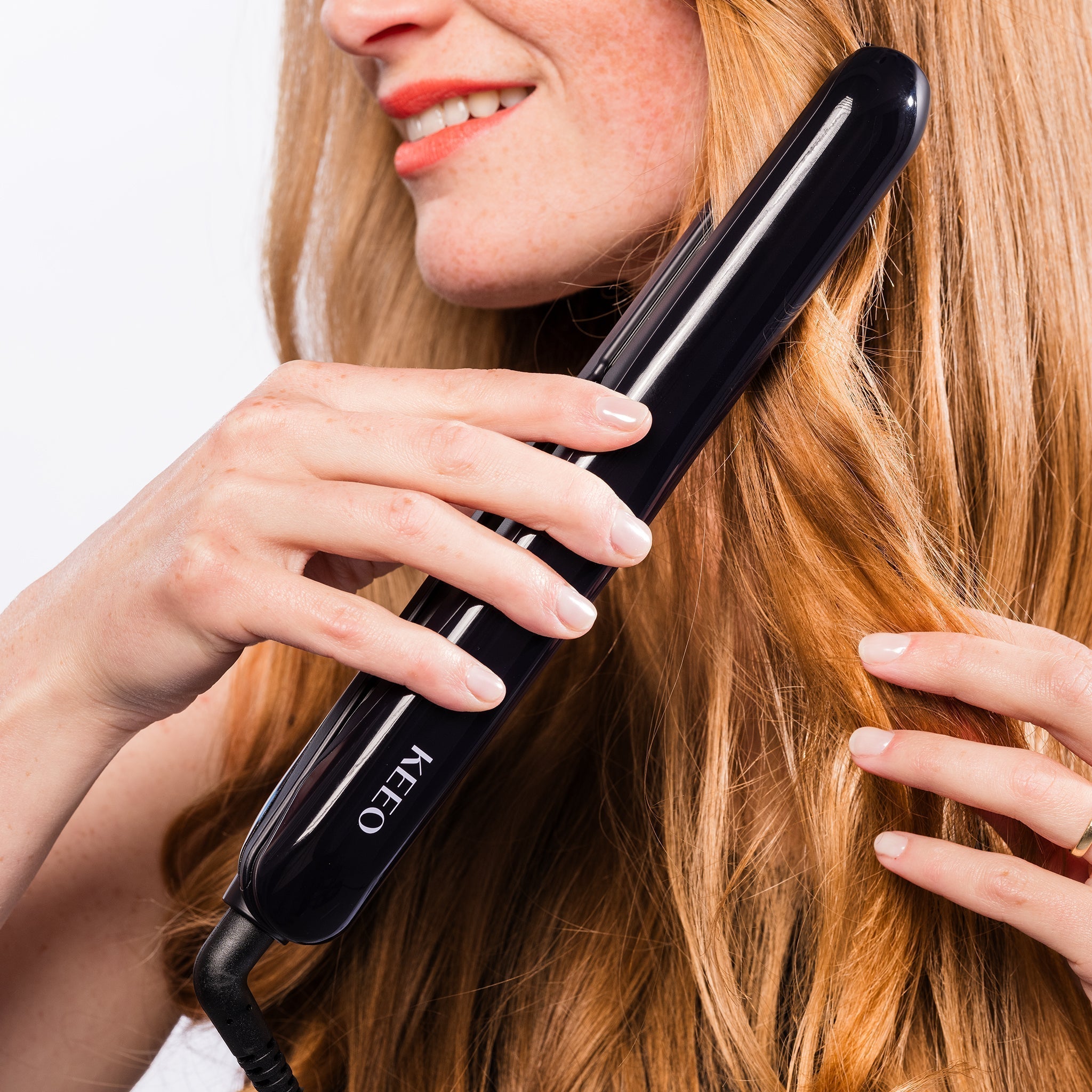
- The KEEO Genius is a gentler straightener for frequent use
For many of us, heat styling is part of our daily routine. Whether it's straightening, curling or achieving the perfect beach waves, using our trusted heat tools is as much a part of our morning routine as brushing our teeth.
Unfortunately, this familiarity can mean we don’t notice when our hair is suffering from heat damage.
Early detection is important, and prevention is always better than cure. But how do you protect your hair health without sacrificing your style?
Don’t worry, we’re here to help.
We developed a gentler hair straightener for frequent use, specifically for this reason.
Now, we’ve also created this guide to help you protect your lustrous locks while styling. In it, you will find expert tips on the safest temperature for each hair type, the best heat protectant and how to heat style smarter for longer-lasting results and healthier hair.
Know Your Hair Type & Its Heat Threshold
The first step to heat styling smarter is to learn your hair type and its maximum heat threshold.
If you aren’t sure of your hair type, we recently created a quick guide to curl patterns - another name for which type of hair you have.
Once you know that, follow our simple chart below:
| Hair Type | Recommended Temperature Range (°F) | Notes / Tips |
|---|---|---|
| Fine / Thin Hair | 120 – 150°C (250°F – 300°F) | Use lowest effective heat to prevent breakage; avoid multiple passes |
| Normal / Medium Hair | 150 – 190°C (300°F – 375°F) | Moderate heat is usually enough; watch for signs of dryness |
| Thick / Coarse Hair | 190 – 230°C (375°F – 410°F) | Higher temps may be needed, but limit time and number of passes |
| Very Coarse / Natural Hair | 210 – 230°C (410°F – 450°F) | Use with caution; ensure hair is fully dry and use heat protectant |
| Damaged / Color-Treated Hair | 150 – 180°C (300°F – 350°F) | Lower temps only; prioritize repair, reduce frequency of straightening |